




Every year, thousands of families try to figure out how to choose the right football academy without making a mistake. This decision shapes 3 to 5 years of a teenager’s life, their athletic development, their education, and sometimes their professional future. Between official training centers, private football academies, and international programs, the options are vast—and the marketing promises are often misleading.
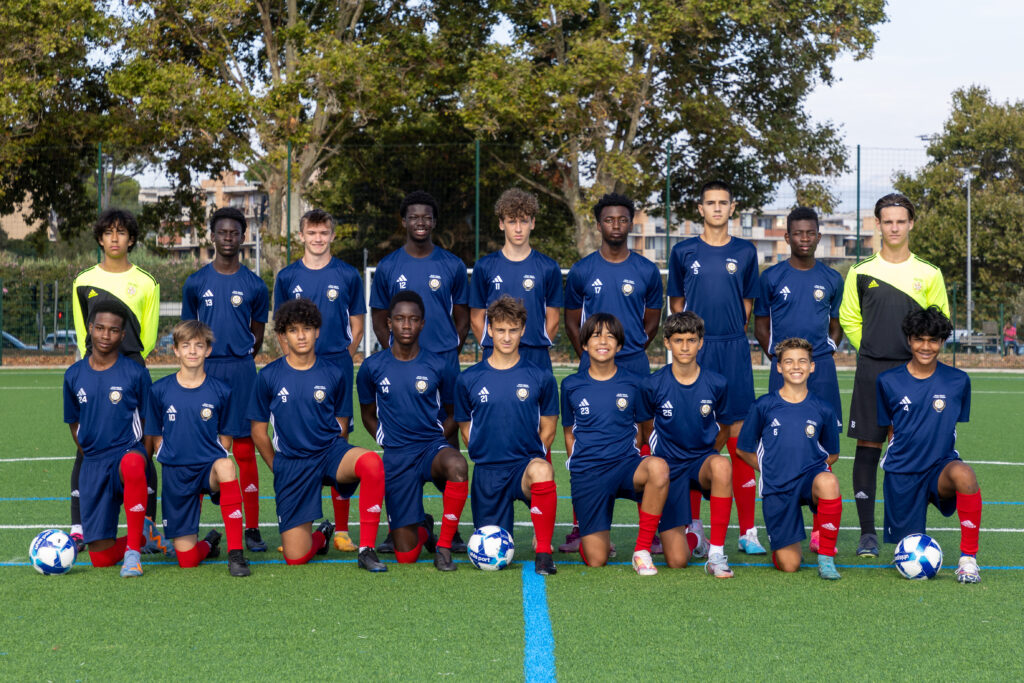
This guide draws on the real-world experience of an international academy on the French Riviera that welcomes players of 68 nationalities, aged 14 to 22. The goal is to provide you with a practical, data-driven, and verifiable framework to help you choose the right program, whether your child is aiming for a professional career or simply wants to play football at a competitive level.
Private football academy or youth academy: Understanding the difference before making a choice
The first deciding factor is structural. A traditional training center is affiliated with a professional club: it recruits locally, trains players according to a single model, and accepts only those who have already been identified as suitable candidates. A private football academy operates differently: it accepts a diverse range of players, including international players, and emphasizes individual development rather than a one-size-fits-all approach.
What a Traditional Training Center Offers

- Access is limited to players identified by the club
- Standardized program, the same for all residents
- Local exhibition, rarely international
- An integrated but inflexible educational system
What a Modern Private Football Academy Offers
- Recruitment based on athletic records and an interview
- Personalized coaching: a plan for each player
- Official competition through FFF-licensed partner clubs
- Flexible Academic Support (High School, College)
- International Exposure and Visibility to Recruiters
Key takeaway: The right choice depends on the player’s profile. A player who is already on a professional team doesn’t have the same needs as an international prospect looking for a springboard. To learn more, check out our article on youth development centers vs. private academies.
The 7 Essential Criteria for Evaluating a football Academy
A football academy is judged by its results, not by its brochures. Here are the 7 criteria you should always check before signing up, listed in order of their impact on a player’s development.
1. The coach-to-player ratio
A healthy ratio ranges from 1 coach for every 6 players to 1 for every 12, depending on age. Beyond that, individual attention becomes impossible. Ask for the exact number per group, not the overall average for the organization.
2. The actual qualifications of the coaches

UEFA certifications, experience with professional clubs, continuing education: ask for names and backgrounds. A former professional player isn’t automatically a good coach—look for someone with both teaching and on-field expertise.
3. The number and quality of official matches
Training without competition doesn’t build skills. Check whether the academy fields its players in official league play (through FFF-licensed partner clubs, for example) and how many games they play per season. If it’s fewer than 20 games, be wary.
4. School and Academic Monitoring
95 percent of professional projects fail. A degree remains the safest bet. The school district must offer genuine, flexible academic support—not just a “possibility of accommodations.”
5. Video Analysis and Strategic Development
Top-tier academies use individual video analysis to correct positioning, decision-making, and tactical awareness. Ask to see an example of a video report given to players.
6. Medical Protocols and Injuries

Having medical staff on hand, clear protocols in case of injury, and partnerships with physical therapists and sports medicine doctors: these are non-negotiable. An injured player who isn’t properly cared for misses an entire season.
7. Exposure to Recruiters
A reputable academy helps players build their profiles (videos, statistics, game footage) and showcases them to scouts. Ask yourself: Which clubs have signed your players over the past three years?
A ratio of one coach to more than 15 players, the lack of official games, or unclear academic support: three red flags that should make you walk away immediately.
Skill Level, Age, and Profile: Tailoring Your Choice to the Player’s Reality

There is no such thing as the “best academy” in an absolute sense. There is, however, an academy suited to a given level of football, age, and goal. A 14-year-old player who is still developing does not have the same needs as a 20-year-old player aiming for a semi-pro contract.
Players Ages 14–16: Building the Foundations
At this age, the focus should be on technique and academics. Look for a sports academy that combines a reasonable training load, regular competition, and a solid academic program. Overworking a 15-year-old is a classic pitfall.
Players aged 17 to 19: Transitioning to a competitive level
As the workload increases, so do the tactical demands. This is the time when exposure to scouts becomes strategic. An academy with an international network and high-level matches makes all the difference.
Players Aged 20 to 22: Landing a Contract
Here, the academy serves as both a facilitator and a springboard. It must offer a short, intensive program that includes organized tryouts and direct connections to professional clubs.
Cost, Funding, and Return on Investment: The Question Nobody Asks

A private academy costs between €15,000 and €60,000 per year, depending on the country, housing, and services. Before comparing listed prices, check what’s actually included.
- Are lodging and full board included or not?
- Are competition fees and FFF licenses included?
- Is academic support billed as an extra charge?
- Trips, tournaments, and tryouts abroad?
- Insurance and health coverage?
True return on investment is measured in games played, measurable progress, and concrete opportunities. Ask for statistics: How many players turn pro or sign with semi-pro teams after completing the program? To explore possible career paths, check out our annual immersive program.
Warning signs to watch for before committing
Some football academies sell a dream without delivering results. Here are the red flags that should raise suspicion.
- The promise of a “guaranteed professional contract”: it’s illegal and misleading
- No verifiable partner club names
- Refusal to disclose the coach-to-player ratio
- Lack of designated medical staff
- Anonymous or fictional testimonials
- No structured academic monitoring
A reputable academy welcomes tough questions, provides statistics, and puts you in touch with current families. If they pressure you to sign up without a tour or a trial, walk away.
Why an international academy is a game-changer for a young player
Choosing a school abroad adds a crucial dimension: cultural adaptation, immersion in English or French, and genuine international exposure. Recruiters look for candidates who have demonstrated their ability to adapt.
On the French Riviera, between Antibes, Nice, Cannes, and Monaco, a player trains in an environment where top-level football is everywhere. French league games, the proximity of professional clubs, and the high concentration of scouts create opportunities that are impossible to replicate elsewhere.
The approach we advocate at Hidalgo Football Academy is based on three pillars: individual potential, a sense of privilege, and human values. No two players are alike—we reject a one-size-fits-all training approach. To understand our philosophy, read our article on our individualized training approach.
Final Checklist: 10 Questions to Ask Before Making a Choice
Print out this list and ask each question during your visit. The answers will give you a clear picture in 30 minutes.
- What is the exact coach-to-player ratio per group?
- How many official games are there per season?
- What are the qualifications of the lead coaches?
- How does academic monitoring work?
- What is the procedure in case of an injury?
- Is there an individual video analysis?
- Which clubs have signed your former players?
- What exactly does the annual fee cover?
- Can I talk to current families?
- What is the individualized plan for my child?
Ready to discover a program that answers all these questions? Apply now or email us at contact@hidalgo.academy. Our team will respond within 48 hours.
FAQ — Frequently Asked Questions About Choosing a Football Academy
What is the right age to join a football academy?
Between the ages of 14 and 16 to build a technical and academic foundation; between 17 and 19 to shift the focus to performance; and between 20 and 22 to aim for a professional or semi-professional contract. Each age corresponds to a different goal.
How much does a private football academy cost?
Between €15,000 and €60,000 per year, depending on the country, accommodations, and included services. Always check what’s included: room and board, licenses, competitions, academic support, insurance, and travel.
Can a private football academy really lead to a professional football career?
Yes, provided that it offers official league matches, genuine exposure to scouts, and personalized support. The success rate depends on the player’s skill level, his work ethic, and the quality of the academy’s network.
How can you assess the quality of a sports academy’s coaches?
Ask about their names, UEFA certifications, professional club experience, and continuing education. A good coach combines teaching skills with on-the-field experience—not just a background as a player.
Should you choose a school abroad?
An international academy provides language immersion, cultural adaptation, and exposure to foreign recruiters. This is a major advantage for a player aiming for a professional career outside his home country.
What signs should lead an academy to reject an application?
A promise of a guaranteed professional contract, no verifiable partner clubs, a refusal to disclose the coach-to-player ratio, no medical staff, vague academic support, and pressure to sign without a physical or tryout.